
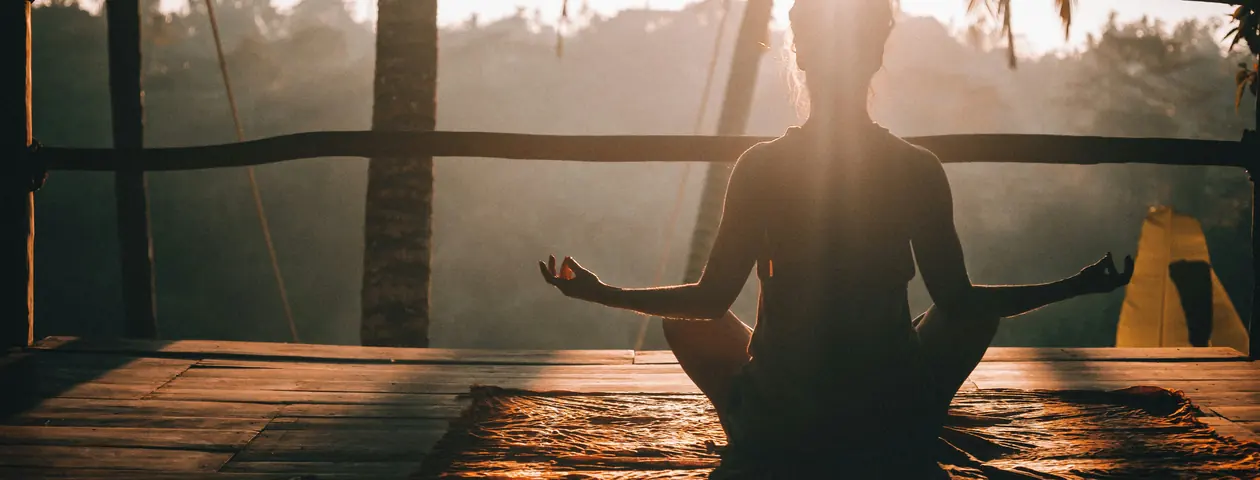
Most people split yoga and meditation into two boxes: movement first, stillness later. In practice, the line is messier. A well-paced yoga session can make meditation easier, and meditation can change the quality of the movement that comes before it.
Who This Guide Is For
- Best for: practitioners who want meditation outcomes without dropping physical practice.
- Not for: readers whose immediate need is choosing a class style or learning basic postures first. Use types of yoga or beginner yoga foundations.
- Go next: if you want more philosophy context, pair this with yoga philosophy; if you need more setup, go to yoga for beginners.
What Is Yoga as Meditation? Defining the Connection
Classical yoga philosophy does not separate yoga from meditation. Patanjali’s Yoga Sutras describe yoga as chitta vritti nirodha — the stilling of the fluctuations of the mind. That is also a solid definition of meditation. The physical postures — the asanas — were originally designed as preparation for seated meditation: building enough strength, flexibility, and body awareness that a practitioner could sit still for extended periods without distraction.
When someone asks “is yoga meditation?” the honest answer is: it can be. A vinyasa class where attention drifts to what’s for dinner is exercise. A session where attention stays anchored to breath, sensation, and the present moment — that’s meditation in motion. The difference lies entirely in the quality of attention, not the shape of the pose.
For a deeper exploration of the philosophical framework behind this, see our yoga philosophy guide.
Maya Recommends
- Start with 10-20 minutes of asana, then add 5-10 minutes of seated stillness.
- Use one breath anchor (Ujjayi or simple counted exhales) for the entire session.
- Keep expectations low for 2 weeks; consistency matters more than “quiet mind” moments.
How Yoga and Meditation Work Together: The Science
The overlap between yoga and meditation isn’t just philosophical. It’s measurable.
A 2018 meta-analysis published in Psychological Medicine reviewed 36 randomized controlled trials and found that mind-body practices combining movement with breath awareness produced significantly larger reductions in anxiety and depression than movement alone. The key variable wasn’t the postures — it was the quality of attention brought to them.
Here’s what happens neurologically when yoga functions as meditation:
The default mode network quiets down. This is the brain region associated with rumination, self-referential thinking, and mind-wandering. Both seated meditation and focused asana practice reduce activity in this network.
The prefrontal cortex strengthens. The area responsible for emotional regulation and impulse control shows increased grey matter density in long-term meditators — and, according to a 2015 study in Frontiers in Human Neuroscience, in experienced yoga practitioners as well.
The autonomic nervous system shifts. Yoga’s emphasis on breathwork directly stimulates the vagus nerve, activating the parasympathetic (“rest and digest”) response — the same mechanism behind most formal meditation techniques.
| Feature | Physical Exercise | Yoga Without Awareness | Yoga as Meditation |
|---|---|---|---|
| Cardiovascular benefit | High | Moderate | Moderate |
| Stress hormone reduction | Moderate | Moderate | High |
| Attention training | None | Incidental | Deliberate |
| Nervous system regulation | Moderate | Moderate-High | High |
| Emotional resilience | Low | Moderate | High |
The 8 Limbs: Where Asana Fits in the Bigger Picture
Patanjali’s Yoga Sutras describe an eightfold path. Asana is only the third limb. Meditation (dhyana) is the seventh. Between them sits pranayama (breath regulation), pratyahara (withdrawal of the senses), and dharana (concentration). Each limb prepares the ground for the next.
This shows up in ordinary practice faster than people expect. A balance pose like Tree Pose (Vrksasana) already asks for a kind of concentration most people would recognize from meditation. The line is thinner than studio schedules make it sound.
7 Types of Meditation That Pair With Yoga
Different meditation techniques integrate naturally with different aspects of yoga practice:
- Focused Attention Meditation — concentrating on a single object (breath, mantra, candle flame). Pairs naturally with pranayama.
- Open Monitoring Meditation — observing thoughts without attachment. Supported by Yin Yoga’s long holds, which train non-reactivity.
- Body Scan Meditation — systematic attention to physical sensation. Almost identical to Yoga Nidra.
- Loving-Kindness (Metta) Meditation — cultivating compassion. Often practiced at the end of a yoga class during Savasana.
- Transcendental Meditation (TM) — mantra-based, twice daily. Can be integrated as a post-practice sitting.
- Visualization / Guided Imagery — mental rehearsal or journey. Common in restorative yoga settings.
- Movement Meditation — conscious, deliberate movement as the object of awareness. This is yoga at its most meditative.
For many practitioners, movement is the easier doorway. Sitting gets simpler once the body has already done some of the settling work.
Yoga Nidra: The Bridge Between Practice and Sleep
Yoga Nidra — “yogic sleep” — is practiced lying down in Corpse Pose (Savasana), guided through a rotation of body awareness, breath, visualization, and the threshold between waking and sleep. Neurologically, it induces a hypnagogic state: brain activity shifts from beta to alpha and theta waves, the same patterns seen in deep meditation.
A 2019 study in the International Journal of Yoga found that a single 35-minute Yoga Nidra session produced significant reductions in anxiety scores comparable to an eight-week mindfulness program. That’s not magic — it’s what happens when deep physical relaxation creates ideal conditions for meditative depth.
Pranayama: The Hinge Between Body and Mind
If asana prepares the body and meditation stills the mind, pranayama is the hinge between them. Breath regulation works bidirectionally: slow it down, and the nervous system follows. Three techniques pair especially well with meditation practice:
| Technique | Sanskrit | Mechanism | Best Used |
|---|---|---|---|
| Alternate Nostril Breathing | Nadi Shodhana | Alternates breath through left and right nostrils; balances nervous system hemispheres. A 2017 Journal of Clinical Psychology study found significant anxiety reduction after 10 minutes. | Before seated meditation |
| Victorious Breath | Ujjayi | Slight throat constriction creates an audible ocean sound; functions as an internal metronome during asana practice. The sound itself becomes the meditation object. | During asana practice |
| Bee Breath | Bhramari | Humming on the exhale directly stimulates the vagus nerve and produces near-immediate relaxation. Excellent for practitioners whose minds resist stillness. | Transition from asana to seated meditation |
Building a Combined Practice: What Actually Works
The best structure depends on the goal. Stress, sleep, focus, and emotional overload do not all need the same mix of movement and stillness.
For Stress and Anxiety Relief
Start with 20–30 minutes of slow, parasympathetic-activating yoga: Legs Up the Wall (Viparita Karani), Supported Child’s Pose (Balasana), Supine Twist (Supta Matsyendrasana). Follow with 10–15 minutes of body scan or Yoga Nidra. The physical practice does the heavy lifting neurologically — the meditation deepens what’s already begun.
For Mental Clarity and Focus
Reverse the sequence. Begin with 10 minutes of seated breath awareness — just counting exhales. Then move into a moderate asana practice, carrying the quality of attention you’ve cultivated into each posture. Close with 5 minutes of seated stillness. This trains the nervous system to maintain focus under physical challenge, which transfers remarkably well to daily life.
For Sleep and Recovery
Yin Yoga followed by Yoga Nidra is clinically one of the most effective non-pharmacological sleep interventions available. Hold passive postures for 3–5 minutes each — Butterfly (Baddha Konasana), Sleeping Swan (Eka Pada Rajakapotasana), Reclined Spinal Twist — then move directly into a 20–30 minute Yoga Nidra recording. Most practitioners report measurably improved sleep quality within two weeks of consistent practice.
Common Mistakes to Avoid
Treating Savasana as a break, not a practice. Corpse Pose (Savasana) is considered by many classical teachers the hardest pose in yoga — not physically, but mentally. Practice treating it as 5–10 minutes of formal meditation.
Using yoga to avoid meditation. A surprisingly common pattern: practitioners fill every available stillness with more movement. The discomfort of sitting quietly is precisely what makes meditation valuable. If 10 minutes of stillness feels intolerable, that’s information worth paying attention to.
Expecting immediate quietude. The mind generates thoughts. That’s its function. A session full of mental chatter isn’t a failed meditation; it’s a meditation where you got to practice returning your attention, over and over. That’s the entire practice.
Separating breath from movement. In any yoga practice that aims at meditation, the breath is the thread. If you can’t feel your breath during a posture, slow the movement until the breath can lead.
Red Flags / Contraindications
Yoga as meditation can be powerful, but internal awareness practices are not automatically gentle for every nervous system.
- Slow down or stop if: breathwork or stillness ramps up panic, dissociation, dizziness, or emotional flooding rather than regulation.
- Get qualified support first if: you have active trauma symptoms, severe panic, major depression with shutdown symptoms, or a history of destabilization during contemplative practice.
- Use modifications if: sitting still feels overwhelming. Walking meditation, shorter holds, open-eye practice, chair support, and shorter exhale-focused protocols are valid alternatives.
Specific modifications to consider:
- Arthritis: use blocks under the hands in Downward Dog (Adho Mukha Svanasana) and reduce floor transitions.
- High blood pressure: avoid inversions and extended breath retention (kumbhaka).
- Trauma history: favor trauma-informed teaching with invitational language and preserved choice.
- Depression: moderate, morning-biased movement may be more useful than very passive evening practice.
FAQ
Can yoga be a form of meditation?
Yes. When movement stays anchored to breath and attention instead of drifting into autopilot, yoga can function as meditation in motion.
Yes — and in classical yoga philosophy, this is one of its core purposes. When a yoga practice is performed with sustained, non-judgmental attention on breath and sensation, it meets the functional definition of meditation: deliberate, sustained, present-moment awareness. The physical postures were historically designed to prepare the body for long seated meditation.
What is the difference between yoga and meditation?
In modern usage, yoga usually means posture practice and meditation usually means seated stillness. In the older philosophical model, meditation is part of yoga rather than a separate activity.
In traditional yoga philosophy, there is no strict separation — meditation (dhyana) is the seventh of yoga’s eight limbs. In contemporary usage, “yoga” usually refers to physical posture practice (asana) and “meditation” to seated stillness practice. The most accurate framing: asana is meditation in motion; seated meditation is yoga without movement. Both train the same fundamental capacity — stable, present-moment awareness — through different means.
How long should I meditate after yoga?
Even five minutes of seated awareness after asana practice may produce meaningful shifts in physiological state. Ten to fifteen minutes is enough to consolidate the nervous system regulation initiated during physical practice. If you’re working with a specific goal (sleep, anxiety, focus), 20–30 minutes of Yoga Nidra after practice is a well-supported protocol.
What is yoga nidra?
Yoga Nidra is a guided rest practice usually done lying down in Savasana. It is often the easiest meditative entry point for people who struggle with still seated practice.
Yoga Nidra is a guided meditation practice performed lying in Savasana that leads the body toward deep rest while awareness remains lightly engaged. It is often used for anxiety reduction, sleep support, and recovery because it is accessible even when seated meditation feels too effortful.
What’s Next?
The most direct path into yoga as meditation is to slow down your next practice by 30%. Less rush between postures, more attention on the texture of each breath. To go deeper into the meditative dimensions, keep pairing this guide with yoga philosophy for the conceptual frame and yoga for beginners if you still need more structure in the physical practice.
🔗 Internal Linking
| Target Article | Anchor Text | Placement in Article |
|---|---|---|
| Yoga for Beginners: Complete Guide | yoga for beginners | What’s Next and FAQ |
| Yoga Philosophy: Core Principles | yoga philosophy | 8 Limbs section |
Read This Next
- Want the full philosophical framework behind dhyana and the 8 limbs? Read yoga philosophy in plain English.
- Need practical sequence building before meditation add-ons? Use the complete poses guide.
Sources
Source standard for this page: meditation reviews, neuroscience-adjacent studies, and breathwork evidence that clarify where movement-based practice overlaps with seated meditation.
- Goyal, M., et al. · 2014 · Systematic review · Matters because it is a widely cited overview of meditation programs for stress and well-being.
- Galante, J., et al. · 2021 · Meta-analysis · Matters because it strengthens the mental-health evidence base around mindfulness-style practice.
- Villemure, C., et al. · 2015 · Human neuroscience evidence · Matters because it connects yoga practice to neurocognitive adaptation rather than posture alone.
- Moszeik, E. N., et al. · 2020 · Clinical trial/review literature · Matters because it addresses Yoga Nidra and anxiety outcomes directly.
- Brown, R. P., & Gerbarg, P. L. · 2005 onward · Clinical breathwork evidence · Matters because pranayama is the hinge between movement and meditative regulation.
Medical note: Meditation can surface difficult emotions in some people. If you have active trauma symptoms or severe anxiety, use trauma-informed instruction and coordinate with a mental health professional.